







Advancing placement line automation to the next level
A new approach that connects automation with nozzle management
Automation in SMT lines continues to advance steadily. However, as automation progresses, tasks that still depend on manual intervention become increasingly apparent.
To date, Fuji has advanced the automation of various operations that can cause production line downtime, including automating feeder exchange, changeovers, and material supply. In contrast, nozzle exchange, replenishment, and collection still required operator involvement.
Improving the efficiency of this nozzle management has therefore become an important focus for achieving a higher level of automation in SMT lines.
Even when feeder exchange and material supply are automated, a variety of nozzle management tasks still remain on the production floor. Examples include nozzle exchange during changeovers, replacement of defective nozzles, and the collection and replenishment of nozzles required for periodic maintenance. These tasks typically require operators to travel to the machine, stop production, and exchange the nozzle station or exchange individual nozzles. As the number and variety of nozzles increase, these tasks become more time-consuming. In addition, the risk of human error, such as forgetting to replenish nozzles or setting the incorrect nozzles, also rises.
For these reasons, nozzle management presents a number of challenges that must be addressed.
There are four main challenges in nozzle management.
1. Production efficiency
In some cases, production must be stopped to perform nozzle exchange during changeovers or periodic maintenance, where a designated number of nozzles are collected and cleaned at the same time.
2. Quality control
Without being able to monitor the condition of individual nozzles, there is a risk of cleaning nozzles that are still usable or, conversely, delaying cleaning of target nozzles and causing a decline in quality.
3. Workload on operators
Nozzle exchange and replenishment tasks are not only time-consuming but also prone to human error.
4. Costs
Maintaining a large number of spare nozzles can help reduce production downtime. However, this increases both capital investment and management work. As a trade off, reducing the number of spare nozzles lowers capital investment and management work but results in more frequent nozzle exchange tasks.
Up to now, nozzle management has partially been automated.
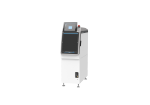
Smart Nozzle Cleaner automates cleaning, inspection, and storage of nozzles.
Advanced Nozzle Maintenance uses nozzle IDs to manage usage of each nozzle and notifies operators of the optimum time to perform maintenance.
However, the processes of delivering prepared nozzles to the production line, exchanging them on the machine, and collecting them afterward have still relied on manual work. In other words, while individual tasks have been automated, the overall workflow has remained disconnected.
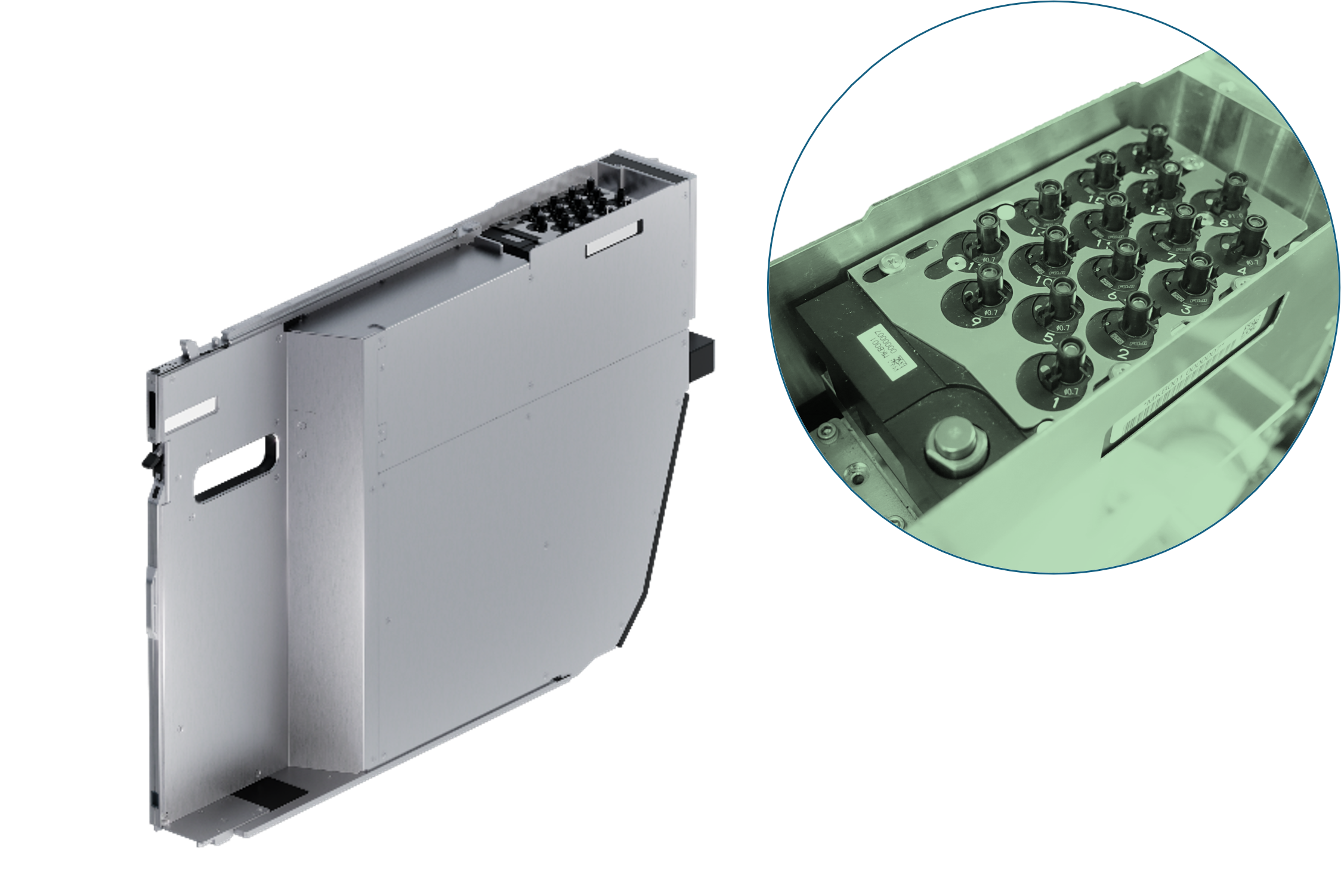
The final piece of the puzzle is the nozzle supply unit.
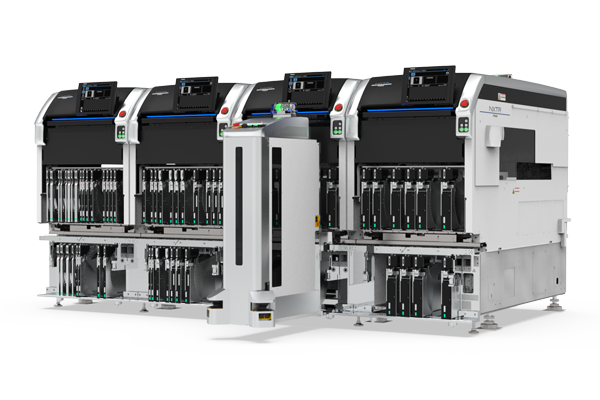
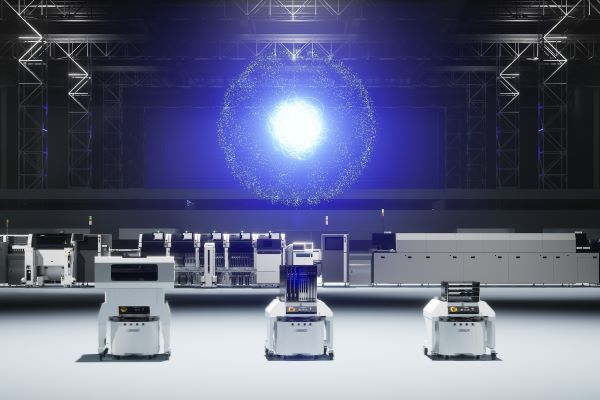
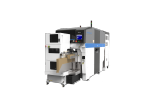
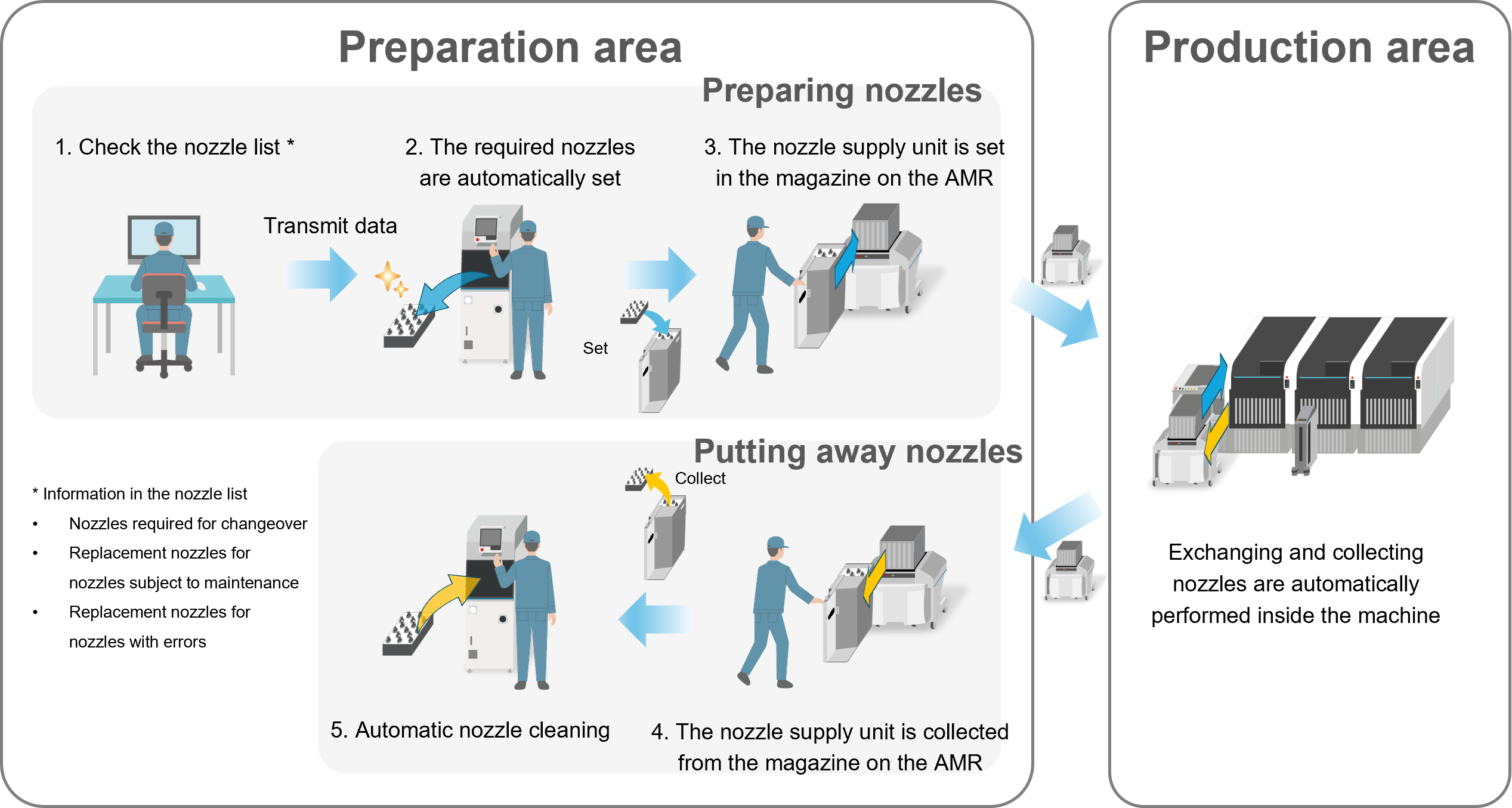
The nozzle supply unit transports nozzles prepared in the preparation area to the production area via an AMR and automatically supplies them to the machine. It also automatically collects nozzles that require replacement during production.
As a result, operators no longer need to stop the machine to perform nozzle exchange. Nozzle management can be performed while production continues.
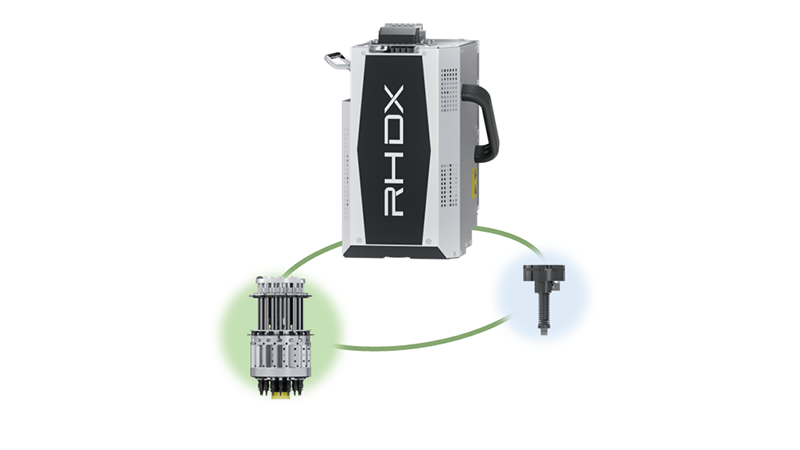
Furthermore, by working in conjunction with Smart Nozzle Cleaner and Advanced Nozzle Maintenance,
the nozzle supply unit enables an integrated nozzle management cycle covering: Cleaning ➜ Inspection ➜ Storage ➜ Nozzle preparation ➜ Replenishment ➜ Collection ➜ Maintenance management
Automation in SMT production lines cannot be fully realized through individual machines alone. The full benefits of automation—higher productivity, greater operational stability, and consistent quality—can only be realized when automation extends beyond the machine itself to the surrounding processes.
The nozzle supply unit is a solution that takes Fuji's automation initiatives to the next level. For NXTR A model users, the nozzle supply unit offers a new option to further reduce sources of line downtime and achieve more efficient operation.