





High speed and high quality
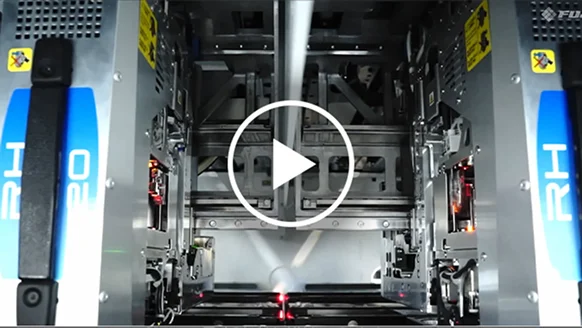
Fuji's technology combines both speed and accuracy
Opens in a new window
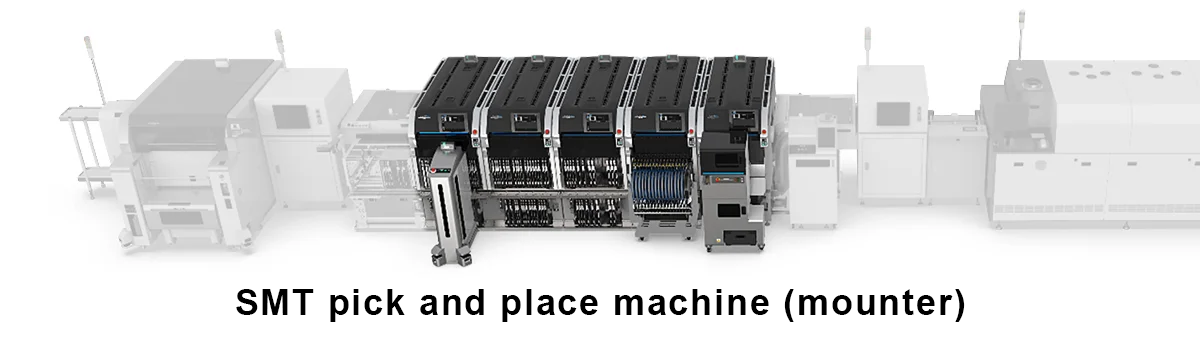
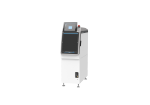
An electronic component pick and place machine is a robot that places electronic components and semiconductors onto electronic boards at high speed and with high accuracy.
The process of placing electronic components onto an electronic board is called "placement". These pick and place machines are core machines in the SMT placement process.
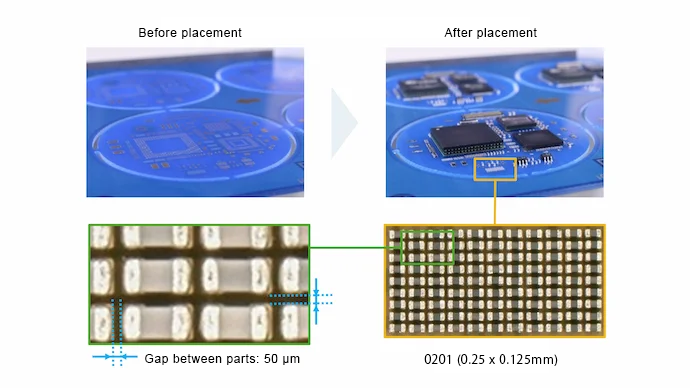
Electronic component pick and place machines are the most critical machines for determining the overall productivity of a placement line.
Achieving both high placement speed and high placement accuracy can significantly improve production efficiency and expand the range of electronic boards (panels) that can be handled.
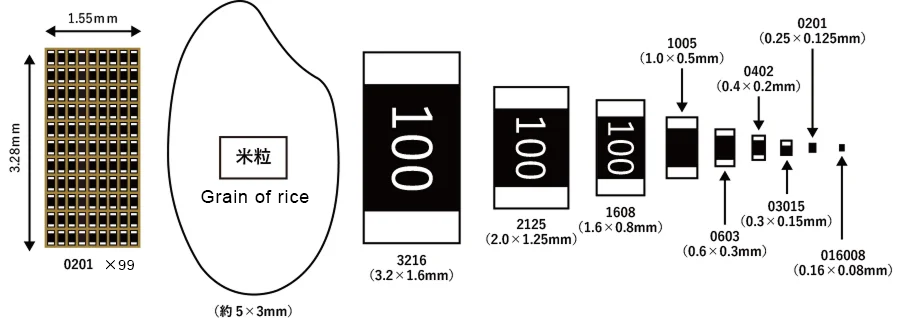
In recent years, there has been a growing demand for machines capable of placing extremely small components, such as 0201 mm (008004") chips (0.25 x 0.125 mm), at a rate of tens of thousands per hour while maintaining high accuracy at the micron level.
Electronic components are becoming increasingly smaller, with many now measuring less than a grain of rice.
Electronic component pick and place machines must operate with high accuracy in order to perform high density placement of these tiny electronic components.
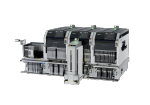
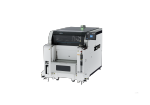
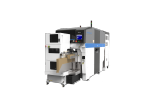
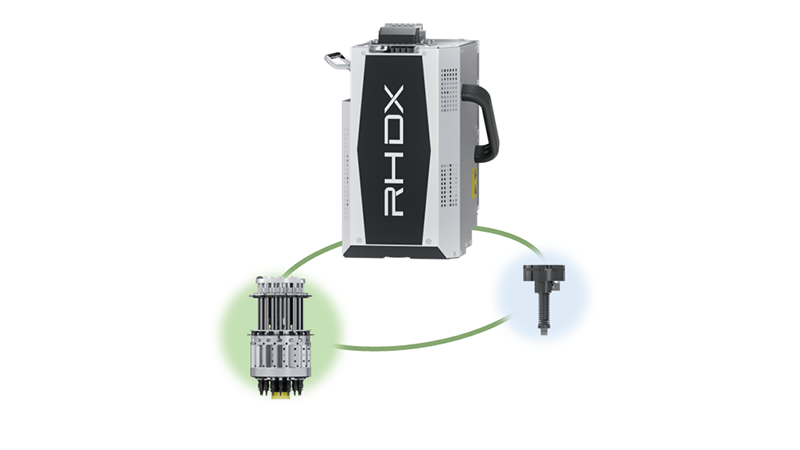
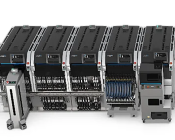
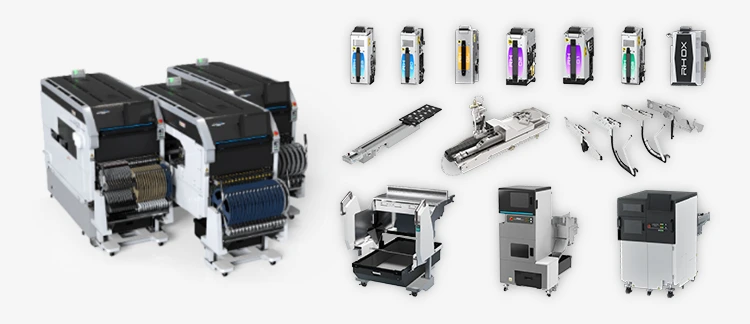
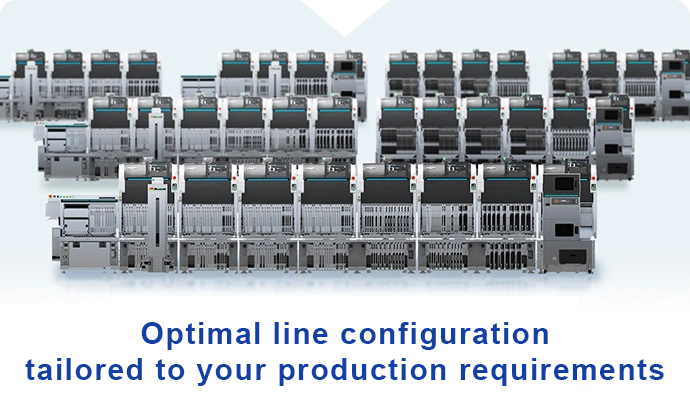
The pick and place machines are completed by combining various units. Optional units allow these machines to support a wide range of specifications.
Fuji pick and place machines are designed to flexibly meet a wide range of production needs by being able to combine various units based on our modular concept. High-quality, stable placement is performed through high-speed, high-accuracy robotic systems and advanced vision processing technology. These machines help achieve both productivity and quality for production from high-mix low-volume production to mass production.
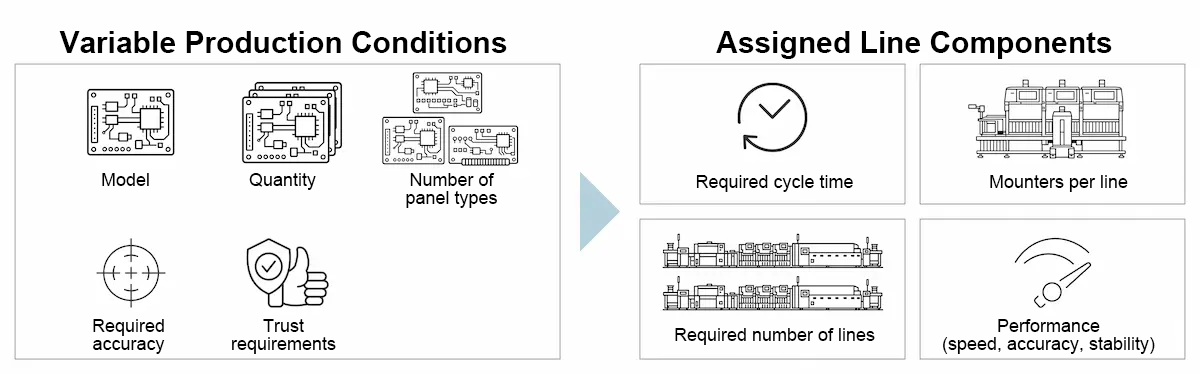
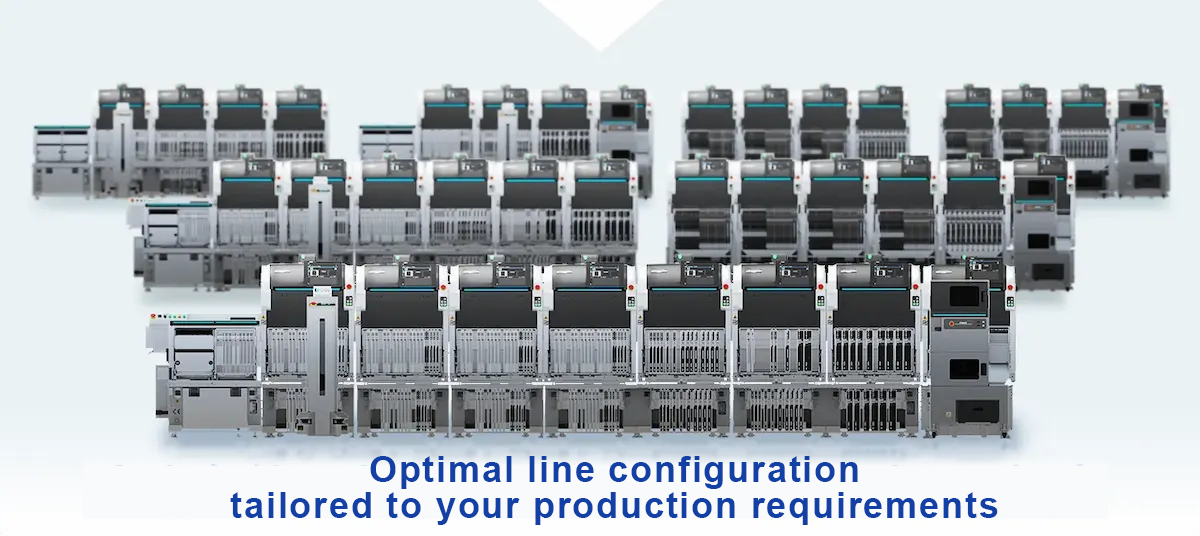
The optimal line configuration is designed based on the product types, production volume, and quality requirements.
The requirements vary significantly depending on the production method; for example, speed is prioritized for mass production, while quality and stability are key for high-reliability products.
Optimizing the arrangement of the pick and place machines to meet these conditions maximizes the production capacity of the placement line.
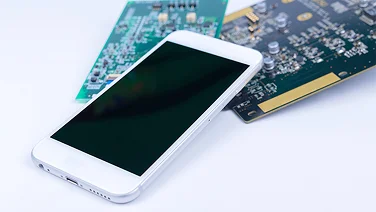
Smartphones, of which more than 1 billion units are produced worldwide each year, contain hundreds to thousands of electronic parts, making mass production essential. As a result, placement speed is critical on the production floor, requiring technology capable of consistently placing small parts with high accuracy within short cycle times. In recent years, there has been a growing demand for advanced placement technologies capable of handling extremely small parts, such as those in the 0201 mm (008004") size (0.25 x 0.125 mm).
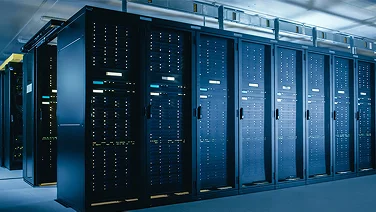
Servers used for AI computing are equipped with large circuit boards that contain numerous expensive high-performance semiconductor parts (such as GPUs). Since these devices operate continuously for long periods, "stability"—the ability to consistently place parts accurately—is critical for the production floor. Even a minor placement defect can lead to significant losses, so production lines capable of maintaining consistent high accuracy are essential.
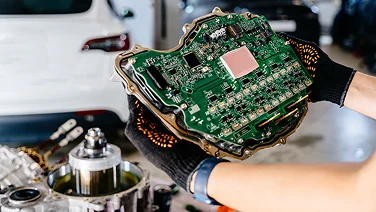
Because automobiles are products that directly affect human lives, reliability is of paramount importance. For this reason, production sites are required to consistently ensure high quality. Manufacturing lines, including placement machines, are designed with inspection functions and traceability systems to record production history, enabling the prevention of defects and the tracking of their causes.
Fuji pick and place machines are designed to meet a wide range of requirements, from smartphones and AI servers to automotive applications, all on a single platform.
Dedicated equipment is not required for each application, allowing flexible support for a wide range of production needs.
These machines deliver optimum placements for every production site, supporting manufacturing worldwide.