






As mobile devices become more advanced and compact, SMT production must deliver even greater productivity and more stable quality. At the same time, parts are becoming smaller and more densely packed, making it increasingly difficult to maintain a stable production system amid labor shortages.
To address these challenges, placement technology that supports productivity, quality, flexible production support, and labor saving is essential.
Increasing quantities of parts
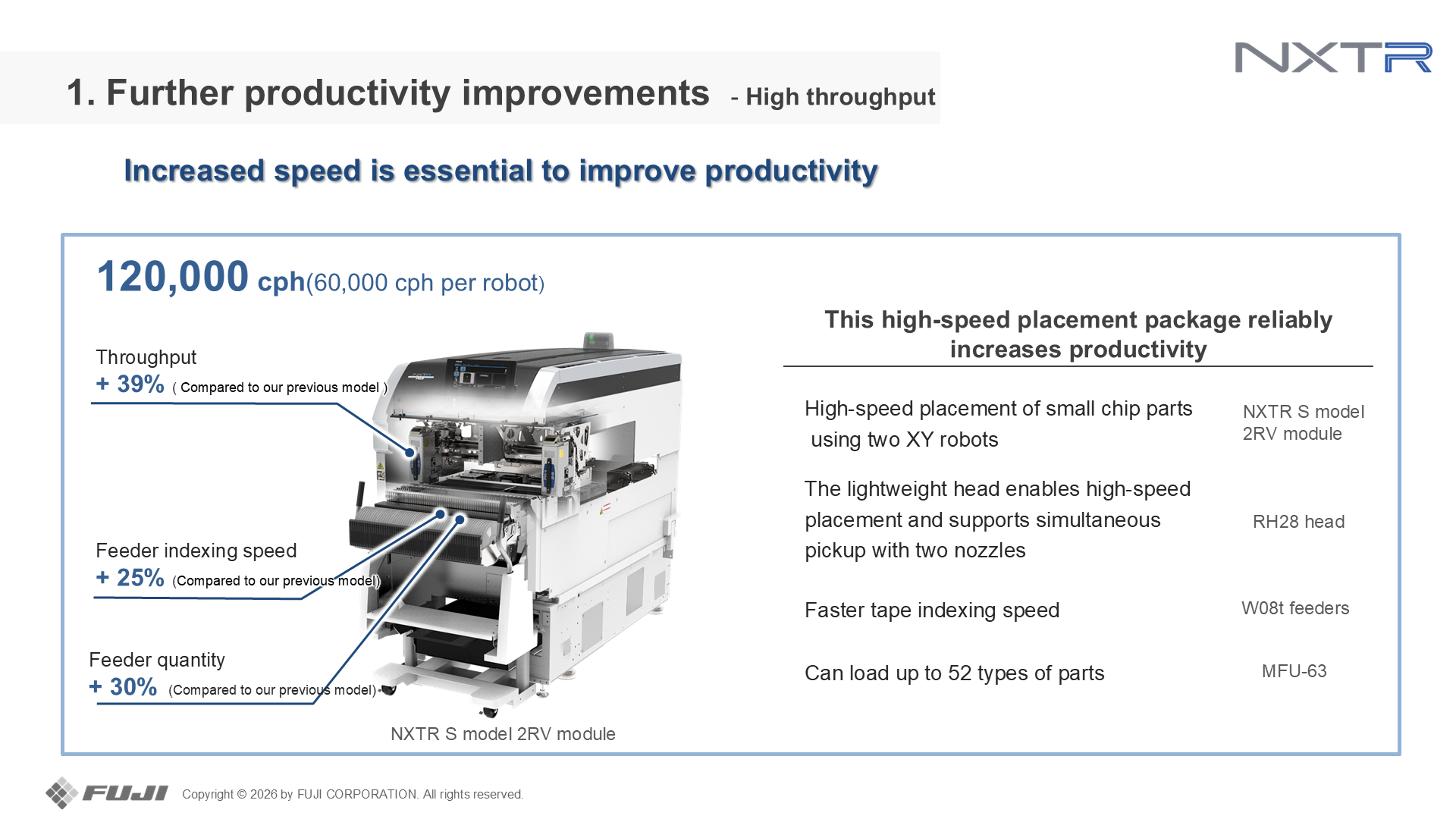
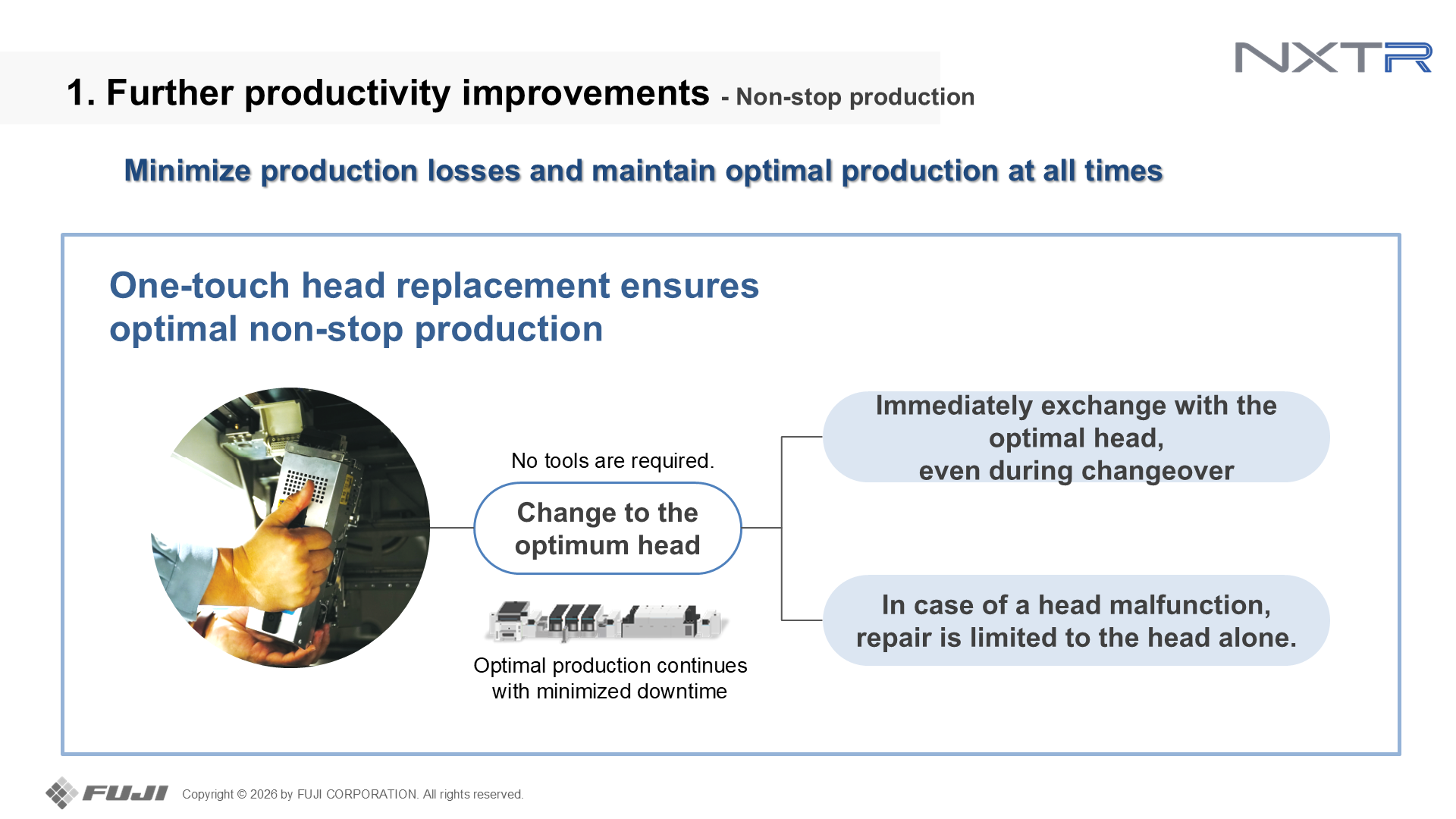
As the number of parts to be placed increases, the replenishment and changeover workloads rise, and the risk of production stopping also increases. Balancing high-speed placements with stable operation is the key to maintaining productivity.
➢
Required placement technology
✓
High productivity from high-speed placements
✓
Minimize production stops
Increasing miniaturization and density
As parts become smaller and panels become more densely packed, even slight position deviations or pickup abnormalities now affect quality. It is important to be able to respond flexibly to a wide range of parts and production conditions while maintaining high-quality placement.
➢
Required placement technology
✓
Stable high quality placements
✓
Flexible support for various production types
Learn more in the downloadable materials
The downloadable materials summarize challenges such as labor shortages, in addition to the increasing number of part placements, part miniaturization, and higher density placements.
Main contents
- Four requirements for placing parts for mobile devices
- Fuji placement solutions for addressing challenges
Use this information to help support your future production line planning and equipment evaluations.